The Degrees of Loss Separation is a simple concept, I go out and find a highly rated team with some losses playing against a crappy team with lots of losses. Next I find a chain of losses which proves beyond a shadow of a doubt (not at all) that the underdog is going to pull the major upset and storm the field. The Final Outcome is calculated simply: Add up the scores of the losers, add up the scores of the winners in the degrees of loss separation and divide both by the # of degrees.
The Game: Army Black Knights vs. Navy Midshipmen
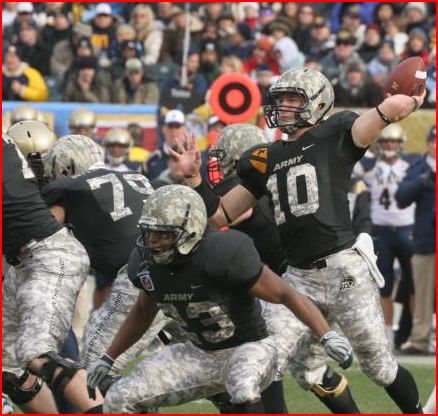
 Army vs. Navy is by far the biggest football game in the country which always consists of one team below .500. The Army-Navy rivalry is as intense as it gets. The Cadets and Midshipmen are trained to "Beat Army" or "Beat Navy". It's a source of heavy pride for each student-athlete-soldier at the academies. This weekend Army heads into the game with even more than normal on the line. With a win Army gets to play in a bowl game. With a loss they do not. In addition Navy has dominated this rivalry since the beginning of the Paul Johnson era so Army desperately needs to get back on the board.
8º of Loss Separation : Army > Ball State > Western Michigan > Buffalo > Akron > Kent St. > Ohio > Temple > Navy
The chain all starts with the Black Knights picking up one of their five wins against Ball St. 24-17. Then the journey enters a whirlwind of MAC games. Ball State finished off their season by upsetting Western Michigan 22-17. Western Michigan picked up a midseason win against Buffalo 34-31. Buffalo defeated near basement dwellers Akron 21-17. The Zips picked up just one of their three victories against Kent St. 28-20. Kent St. knocked off OH IO the regular 20-11. Kent St. knocked off near MAC champ Temple 35-17. The Owls finally complete the circle with their 27-24.
Final Outcome: Army Black Knights 26 Navy Midshipmen 19
The Black Knights get into the Armed Forces Bowl with a victory over the Midshipmen. They may not have the skill set or the coaching of Navy but they sure have them beat in camo uniforms which will obviously be the determining factor in the outcome of the game.
The Game: Army Black Knights vs. Navy Midshipmen
 Army vs. Navy is by far the biggest football game in the country which always consists of one team below .500. The Army-Navy rivalry is as intense as it gets. The Cadets and Midshipmen are trained to "Beat Army" or "Beat Navy". It's a source of heavy pride for each student-athlete-soldier at the academies. This weekend Army heads into the game with even more than normal on the line. With a win Army gets to play in a bowl game. With a loss they do not. In addition Navy has dominated this rivalry since the beginning of the Paul Johnson era so Army desperately needs to get back on the board.
8º of Loss Separation : Army > Ball State > Western Michigan > Buffalo > Akron > Kent St. > Ohio > Temple > Navy
The chain all starts with the Black Knights picking up one of their five wins against Ball St. 24-17. Then the journey enters a whirlwind of MAC games. Ball State finished off their season by upsetting Western Michigan 22-17. Western Michigan picked up a midseason win against Buffalo 34-31. Buffalo defeated near basement dwellers Akron 21-17. The Zips picked up just one of their three victories against Kent St. 28-20. Kent St. knocked off OH IO the regular 20-11. Kent St. knocked off near MAC champ Temple 35-17. The Owls finally complete the circle with their 27-24.
Final Outcome: Army Black Knights 26 Navy Midshipmen 19
The Black Knights get into the Armed Forces Bowl with a victory over the Midshipmen. They may not have the skill set or the coaching of Navy but they sure have them beat in camo uniforms which will obviously be the determining factor in the outcome of the game.
Comments